
Who Gets to Move?
Why the Government’s Mobility Devices Consultation Matters for Disabled Riders
By Jamie Lawson, Inclusive Cycling Advisor, Bikeworks

For many disabled people, an adaptive cycle is not a leisure extra. It is how you get moving outdoors. It can be the difference between staying at home and getting to the park, between relying on someone else and travelling independently, and between watching life happen and being part of it.
That is why the Government’s consultation on powered mobility devices matters.
On paper, it is about regulation. In practice, it is about whether disabled people are properly recognised in the ways we move through public space, and whether the law has kept up with the reality of disabled people’s lives.
At Bikeworks, we see every week how access to the right cycle can change someone’s relationship with movement. For many disabled riders and people living with long term health conditions, an adaptive cycle can be a mobility aid, a rehabilitation tool and often the only realistic way to travel independently outdoors.
An outdated legal framework
The problem is that the legal framework has not kept pace.
Much of the current legislation still relies on the classification of “invalid carriages,” the outdated legal category still used for mobility scooters and powered wheelchairs.
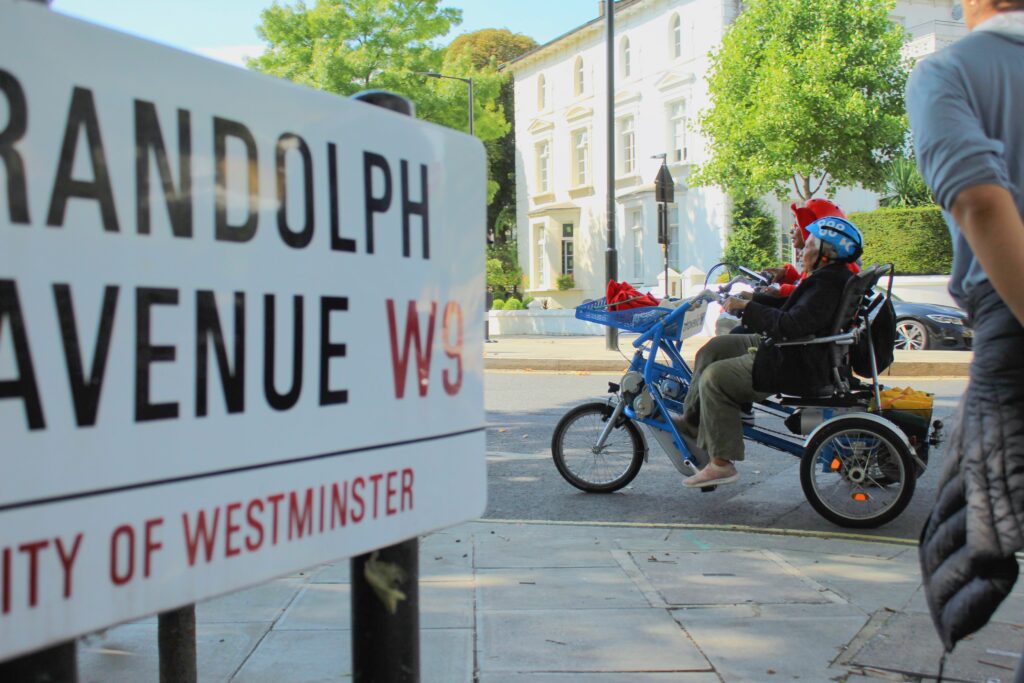
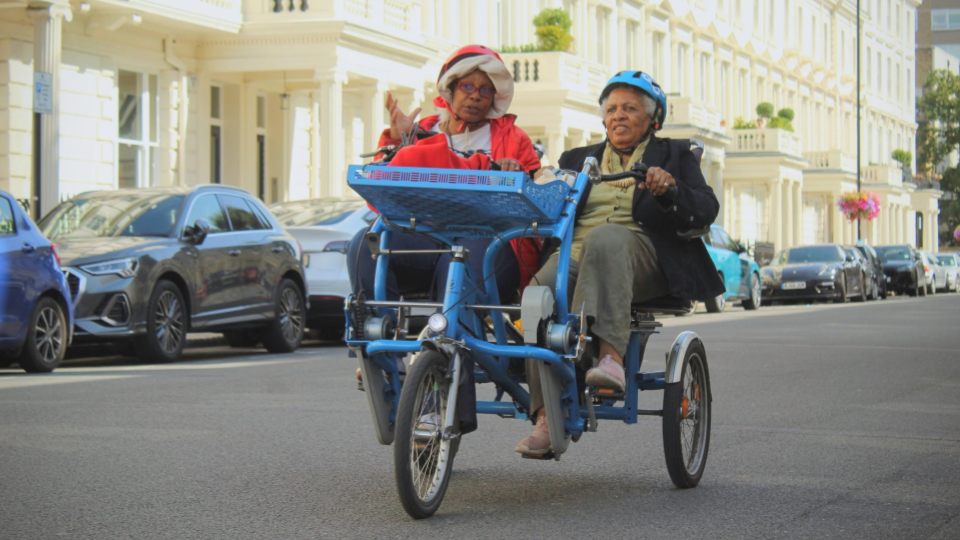
But disabled people are using a far wider range of cycles and powered devices than those old categories allow for. Handcycles, trikes, recumbents and side by side cycles are all part of the picture now. Many also use electric assistance to make cycling possible with conditions that affect balance, strength, fatigue or mobility.
This is part of everyday movement for many disabled people.
And yet the law does not deal with these cycles clearly enough. That leaves disabled riders and the organisations supporting them navigating uncertainty about where they fit, what rules apply, and whether the infrastructure that is supposed to open up movement really does so.
What that means in real life
In London, this matters a great deal.
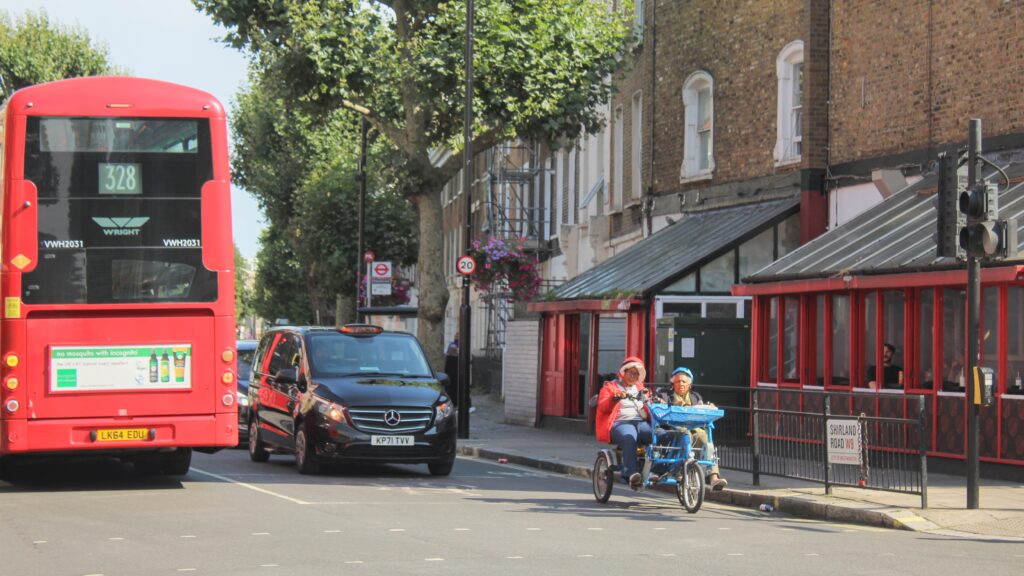
The city has invested heavily in cycle routes, shared paths and greener ways of moving around. Parks are part of that too. For many disabled people, parks and traffic free routes are some of the few places where movement outdoors feels possible, enjoyable and worth the effort.
But many adaptive cycles are wider, longer or electrically assisted. Riders are often left dealing with uncertainty in the very places that are supposed to support movement.
Can I use this route?
Will I be challenged here?
Will this gate fit my cycle?
Am I meant to be on this path, or am I about to be treated like a problem?
That uncertainty is not minor. It sits inside ordinary journeys.
For one London rider we work with, a handcycle is the only way they can travel independently across the city. It allows them to move between home, the park and local amenities using the same routes as other cyclists. But when the law is unclear, even a straightforward journey can come with an extra layer of doubt and negotiation that other people do not have to think about.
For disabled riders who rely on adaptive cycles, these are not bits of leisure equipment. They are part of how people move through the city. Law, policy and infrastructure need to catch up with that fact.
Why this consultation matters
This is not just about what a device is called. It is about whether the law reflects how people actually live.
Wheels for Wellbeing has been leading important work in this area through its Every Journey, Everyone campaign, bringing together disabled people, active travel organisations and mobility providers to push for a framework that reflects lived experience.
That matters because policy written without disabled people in the room tends to fall back on tidy categories that do not match real life. It produces systems that make sense on paper and fail people in practice.
Disabled riders, inclusive cycling providers and community organisations need to be part of this conversation because we know where the gaps are. We live them.
Why it matters to Bikeworks
This year Bikeworks marks twenty years of using cycles as a tool for good. Across those years, we have seen how inclusive cycling opens up movement for people who are too often excluded from sport, physical activity and public space more broadly.
For many riders, access to the right cycle is the difference between staying at the edge and taking part. It can mean independence, recovery, confidence and freedom.
That is why this consultation deserves attention.
Because at its heart, the question is simple.
Who gets to move freely through our cities?
Join the conversation
The Department for Transport consultation on powered mobility devices is open until 22 April 2026.
Wheels for Wellbeing is also sharing guidance and discussion through its Every Journey, Everyone campaign for people and organisations who want to respond.