Why the Right Fleet Matters for Inclusive Cycling

By Jamie Lawson, Inclusive Cycling Advisor at Bikeworks

When people think about cycling, they often picture two wheels, balance, and speed. But cycling can take many different forms, and with the right equipment, it becomes an activity that everyone can enjoy. That’s why having a fleet inclusive of cycles is essential, not only for All Ability Clubs, but also for schools, local authorities, care homes, and community groups that want to make cycling accessible to everyone.

As someone who both advises on inclusion and rides at Bikeworks’ All Ability Clubs, I see every week how the right cycle can remove any unnecessary barriers. A cycle that feels safe and comfortable not only makes participation possible, but also enables riders to experience the joy and freedom of cycling.
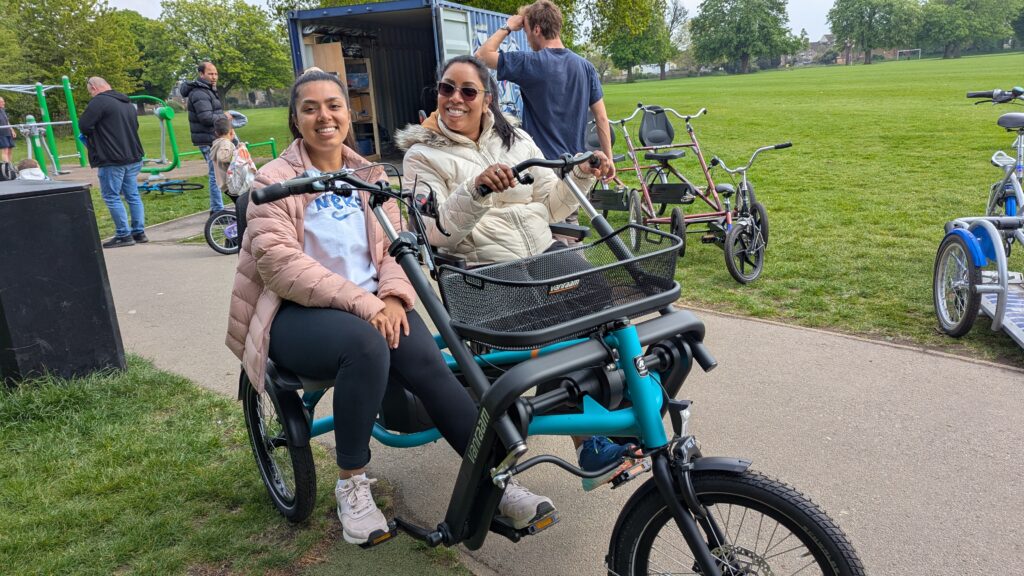
 

With the right cycles, no one is left out.

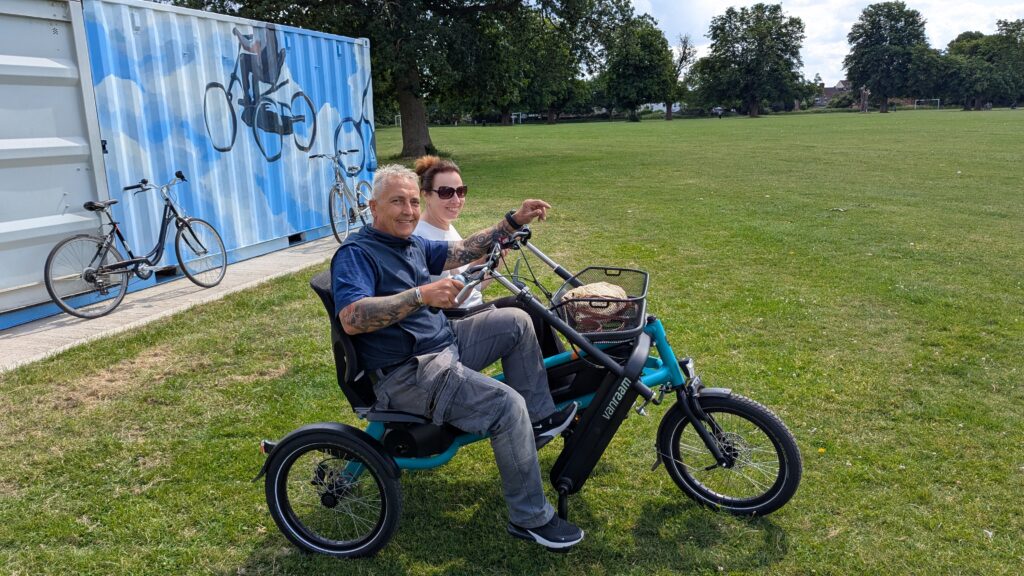
Recently, one of our clubs added two new cycles to the fleet: the Fun2Go and the EasyRider. These bikes have already transformed the way people ride together. The Fun2Go is a side-by-side tandem, so two riders can pedal and chat at the same time — perfect for friends, carers, or anyone who feels more confident with riding with company. The EasyRider, with its low step-through frame and supportive seat, makes cycling accessible for people who may struggle with balance or joint pain.

“Investing in the Fun2Go and EasyRider cycles from Bikeworks has been one of the best decisions for our community. As specialists in inclusive cycling, Bikeworks helped us choose the right bikes to meet local needs. These cycles have opened up riding to people of all ages and abilities, and we’re already seeing the benefits — more people taking part, more confidence, and more families enjoying cycling together.


I’ve seen first-hand the joy these cycles bring.

Riders who hadn’t been on a bike in years are rediscovering the freedom of movement. Families are cycling together in ways they never thought possible. One person told me that the Fun2Go made them feel like they were “part of the action again,” after years of watching from the sidelines.

For me personally, my favourite cycle is the Fun2Go. There’s something special about being able to share the ride side by side. It turns cycling into a social activity — laughter, conversation, and exercise all rolled into one.

Getting the fleet right isn’t just about variety. It’s about equity.

It ensures that no matter your age, ability, or confidence level, there’s a cycle that can work for you. That’s what makes inclusive cycling so powerful. It’s not just about bikes — it’s about freedom, wellbeing, and connection.

If you’re curious, visit us at our Inclusive Cycle Sales Showroom opposite the Velo in the Olympic Park, or come along to one of our All Ability Clubs. We can help you find the right fleet for your school, local authority, care home, or community group.

Tackling Exclusion: Why People with Learning Disabilities Must Be Seen

By Zoe Portlock, Co-Founder and Co-CEO, Bikeworks

Twenty-five years ago, I began my career at a charity supporting people with learning disabilities and their families. I saw firsthand the exclusion faced across every part of life  from education and employment to sport, leisure, and community participation.

Decades later, the story is far too similar. Today, people with learning disabilities remain among the most excluded in society  more likely to experience loneliness, less likely to be in work, and more at risk of poor physical and mental health.

Driven by purpose, in response I established a supported employment and training service that still operates today, and went on to develop two social enterprises  one providing employment through fleet vehicle valeting, and the other, Bikeworks, using cycles as tools for inclusion, wellbeing, and connection.

But despite this – and the determined efforts of many across the years  people with learning disabilities continue to face persistent and systemic exclusion. The data lays bare just how entrenched the inequality remains:

  • Just 5.1% of adults with a learning disability known to social care are in paid employment (NHS Digital, 2023).
  • People with learning disabilities are twice as likely to be physically inactive compared to the general population (Sport England, 2020).

Why is this still acceptable?

At Bikeworks, we know what works. Our All Ability Clubs and events, and inclusive maintenance training, provide access to physical activity, independence, and confidence building. But this is still seen as niche  something unique, rather than the norm. For real change to happen, we need to scale inclusion, and that requires political will, sustained investment, and better data.

Here’s what needs to happen:

  • Better recording of learning disability data across physical activity and health settings, so we understand participation  or lack of it  and respond accordingly.
  • Targeted investment into inclusive cycling infrastructure and programmes, building on proven models that enable access and confidence.
  • A national employment strategy that includes social enterprise and supported employment models  recognising the skills, talents, and aspirations of people with learning disabilities.
  • A policy framework that treats inclusion not as a bolt-on, but as a baseline — embedded across sport, education, work, and community life.

This Learning Disability Week, we stand proudly with our east London neighbours at Bridget’s Café — run by ASL, a social enterprise championing employment and visibility.

Every week, the team rides with us at our All Ability Club. Every day, they show what’s possible when opportunity meets equity.


Let’s not just celebrate inclusion.

Let’s fund itlegislate for it, and embed it into our systems.

Because people with learning disabilities are not the problem.

The structures that exclude them are.

And those can, and must — change.

Footnote:

Since the COVID-19 pandemic, Bikeworks has seen a marked increase in participation across our All Ability Club programme. At Queen Elizabeth Olympic Park, attendance more than doubled in the past year alone — a rise of over 100%. Despite this visible and growing demand, we continue to fight for consistent revenue investment. This increase is not simply about popularity — it highlights a deeper issue: the continued absence of inclusive, community-level physical activity offers that meet the needs of disabled people and those with learning disabilities.

Bridgets Cafe ASL and Bikeworks