Bikeworks at 20: Disability, Cycling and What Makes Riding Possible

Twenty years of inclusive cycling has taught us something important: the cycle is only one part of access.

The right cycle can completely change what is possible. But so can the chance to try different cycles, somewhere to ride regularly, people who understand how different designs work, and streets and public spaces that accommodate a much wider range of riders and ways of moving.

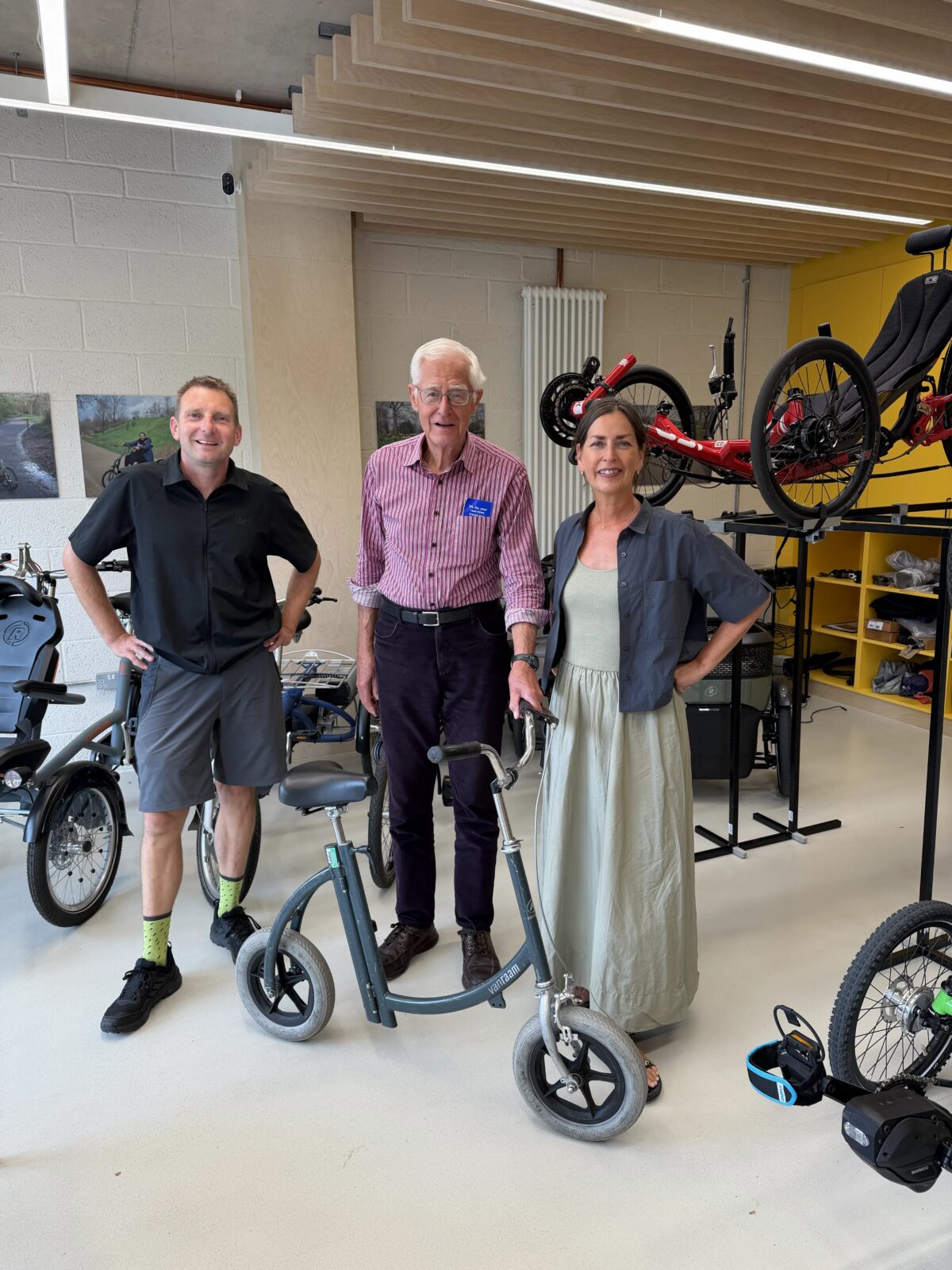
The all-important relationship between the person, the cycle and the environment they are riding in was at the heart of a conversation at our Inclusive Cycling Hub at Queen Elizabeth Olympic Park, when Professor Glen B. Norcliffe joined Bikeworks Co-Founders Zoe Portlock and Jim Blakemore.

Glen is Professor Emeritus of Environmental and Urban Change at York University in Toronto. His research explores the relationship between disability and cycling technology: how cycles have changed over centuries, who has shaped those changes, and what happens when cycling infrastructure and systems are designed around too narrow an idea of the rider and the cycle.
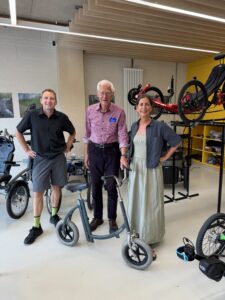
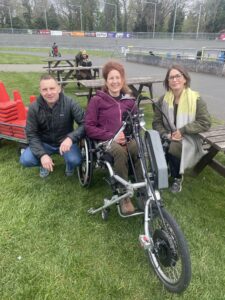
Professor Glen Norcliffe with Zoe Portlock and Jim Blakemore at Bikeworks Inclusive Cycling Hub, Queen Elizabeth Olympic Park.

The cycle itself can change

One of the most compelling ideas in Glen’s research is that disabled people have not simply received cycles designed for them. They have also played a part in shaping the technology.

His research traces the relationship between disability and cycling back centuries, showing how riders, families, mechanics and manufacturers have identified problems, exchanged ideas, tested designs and adapted cycles around what people actually wanted and needed to do.

That history challenges the idea of a standard bicycle designed for a standard body, with specialist solutions added later for everyone else.

Cycle design has evolved because riders have needed different things from it.

Handcycles offer another way to generate power. Tricycles can provide greater stability. Side by side cycles change the experience of riding with another person. Electric assistance can make distance, hills or fatigue more manageable. The cycle itself is not fixed. It can be adapted and rethought.

And the reasons for riding are just as varied: getting somewhere, being active, spending time with other people, enjoying the experience of cycling, or simply making it part of everyday life.

We see that every week at Bikeworks.

For us, the question is reframed. Rather than asking, “How do we get this person onto this cycle?”, we ask:

“What does this person want cycling to make possible?”

From there, we can look at what combination of cycle design and adaptations might work. That could mean a different seating position, steering system or pedal arrangement, greater stability, electric assistance, riding alongside another person, or trying several different cycles before finding the right fit.

There is no one cycle that works for everyone, because people move differently and want different things from cycling.

Access is bigger than the cycle

Glen’s research also looks beyond the technology itself.

If cycling infrastructure is designed around one conventional two wheeled bicycle and one assumed type of rider, exclusion can become built into the environment.

A specialist cycle might work brilliantly for someone, but a gate, bollard or access barrier may be too narrow. A route may not accommodate a longer or wider cycle. Suitable cycle storage can be difficult to find, particularly in dense urban environments. And a specialist cycle may cost thousands of pounds, with nowhere nearby to try different options before making that investment.

But sometimes the barrier comes much earlier.

Cycling may never have been suggested as an option in the first place.

That matters because access is also about visibility: whether disabled people are seen as cyclists, whether different types of cycles are visible in our streets and public spaces, and whether people can see cycling as something that might be possible for them.

This is where Glen’s research and Bikeworks’ experience meet particularly strongly.

Over time, we have come to understand access as a relationship between the person, the cycle, what they want to do, the support around them, the environment they are moving through, and whether people and cycles like theirs are visible within cycling at all.

Our All Ability clubs demonstrate this every week. The specialist fleet matters, but so does being able to try different cycles, return regularly and discover through experience what works.

That same learning now runs through other parts of Bikeworks.

Our health work explores where cycling can sit within someone’s relationship with physical activity and wellbeing.

Cycle Connect takes cycling into everyday journeys, providing an inclusive active travel option for getting to shops, appointments, activities and other places people want to go.

And our Inclusive Cycle Showroom creates the time and space for people to test and compare specialist cycles, drawing on 20 years of experience helping people explore different ways to sit, steer and pedal before deciding whether owning a cycle is right for them.

Across all of this, the principle is bigger than access to a piece of equipment:

Real access to cycling is created when the right cycle, the right opportunity, the right environment and the possibility of seeing yourself as a cyclist come together.

Knowledge built through relationships

Glen’s visit also brought into focus something else: how much of the knowledge in inclusive cycling is held through relationships built over many years.

London’s inclusive cycling world is relatively small, and deeply connected. Jo Roach, founder of Pedal Power, and Isabelle Clement at Wheels for Wellbeing are two of the people Glen and Bikeworks have in common.

Pedal Power, Wheels for Wellbeing and Bikeworks have distinct histories and roles, but between them sits a substantial body of knowledge about disabled people cycling — built through lived experience, advocacy, direct delivery and long-term relationships with riders.

Glen’s research connects strongly with that world because it recognises that knowledge does not sit in one place.

It is held by disabled riders themselves. It is held by families, practitioners, mechanics and manufacturers. And it is also held collectively by organisations that have spent years working with many different riders, seeing patterns emerge across cycles, environments and situations.

History tells us that a great deal is already known.

We know choice matters. We know access to a specialist cycle is not the same as access to cycling. We know the environment can open up riding or stop it altogether. And we know cycle technology develops when the people using it are part of shaping it.

Research gives that accumulated knowledge a wider frame. Glen’s work traces patterns across history, technology and society, showing how riders, cycles and the environments around them have continually shaped one another.

Practice shows what that knowledge looks like in real life, across thousands of individual experiences.

That is one of the reasons we want Bikeworks at 20 to look beyond our own history.

Over the coming year, we want to return to people who have helped shape inclusive cycling alongside us — including Jo and Isabelle — not simply to look back at what has been achieved, but to ask what they have learned, what still has not changed, and what they believe the next chapter of inclusive cycling needs to look like.
How does what we know shape what comes next?

That feels like an important question as Bikeworks turns 20.

Specialist cycle technology continues to develop. Electric assistance is widening what different cycles can do. Riders, practitioners and organisations hold substantial experience. Research is giving us a deeper understanding of how technology evolves and of the assumptions still built into cycling systems.

The challenge is not simply developing better cycles. It is making sure the knowledge already built through riders, families, practitioners, manufacturers and organisations also shapes policy, infrastructure, services, investment and the decisions made around cycling.

What range of cycles is considered when streets and routes are planned? How do health and transport systems understand cycling? Where does investment go? How affordable are the options available? And whose experience carries weight when those decisions are made?

Glen’s research gives us a way to look across history and understand how riders, technology and environments have shaped one another.

Bikeworks brings another perspective: 20 years of working directly with riders, different cycles and different places, seeing repeatedly what opens up cycling and what gets in the way.

Together, those perspectives shift the question beyond whether disabled people can cycle.

How do we use what is already known to shape better cycles, better opportunities to ride and better environments around them?

This conversation marks the start of our reflective Bikeworks at 20 series. Over the coming year, we’ll be revisiting the people, ideas and practice that have shaped our work, and asking what two decades of experience can teach us about what comes next.
Looking for a specialist cycle?

Cycle 535: Six riders. Five days. 535 kilometres.

This September, six NRP riders will set out from Land’s End to cycle 535 kilometres — 332 miles — to Guildhall in London.

Matt Kennedy, Alex Stebbings, Dean Walker, Ryan Hicks, Joe Cowley and Richard Wightman are taking on the five-day challenge with one goal: to raise £10,000 towards increasing Bikeworks’ specialist cycle fleet for disabled children and young people.

NRP has chosen Bikeworks as its charity partner for Cycle 535. When NRP first approached us, Chief Executive Matt Kennedy explained why Bikeworks stood out:

“As we explored potential partners, Bikeworks stood out immediately. Your mission of using cycling as a tool to transform lives, tackle inequality and create stronger communities resonates strongly with both our organisation and the aims of the conference.”

Cycle 535 will take place ahead of the London Walking, Wheeling and Cycling Conference at Guildhall, which NRP sponsors. It also comes as Bikeworks marks 20 years of using cycles as a tool for good.

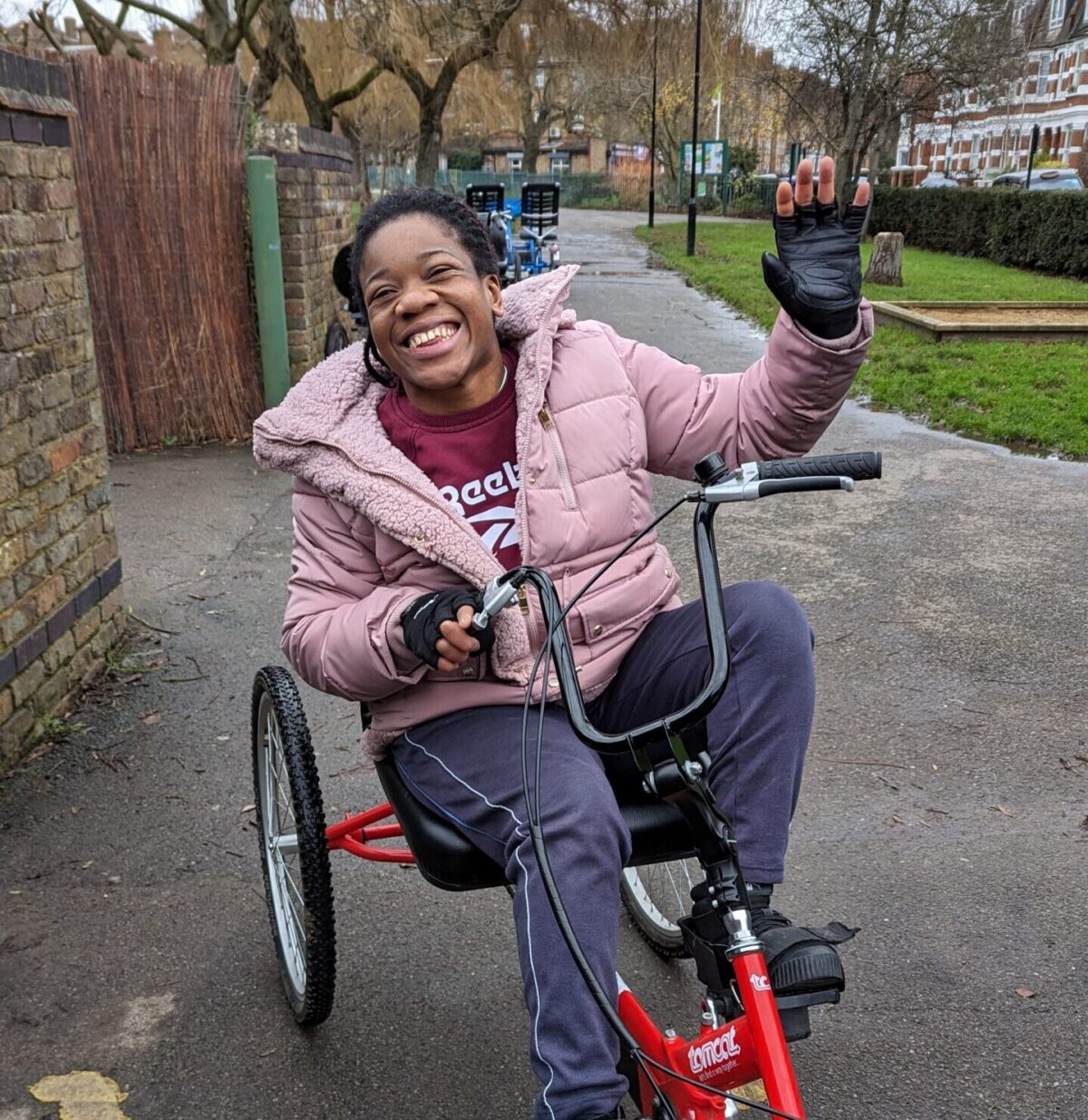
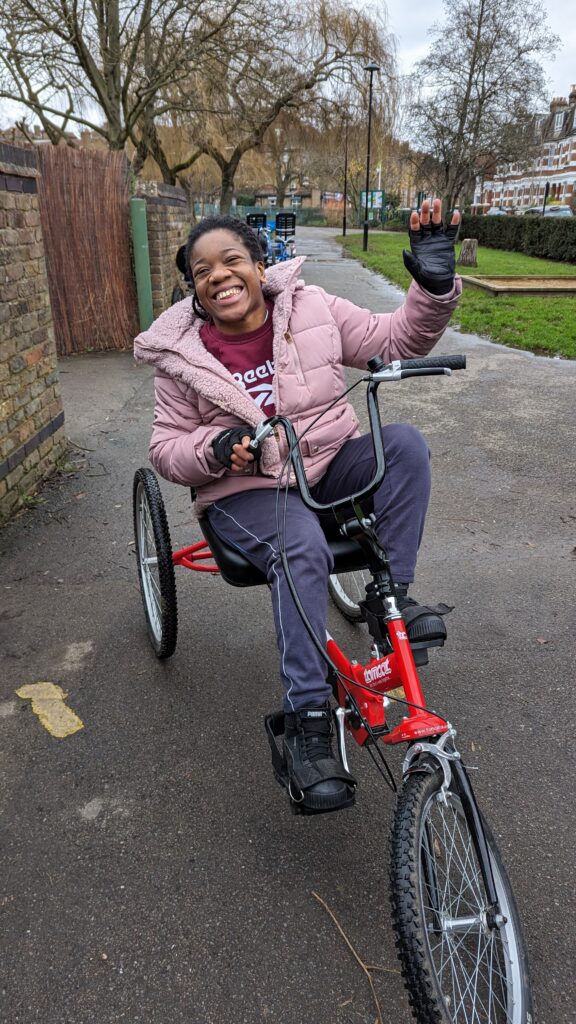
A rider of the All Ability Club cycling on a trike

What are they riding for?

Disabled children and young people can cycle. Too often, it is the opportunity that is not provided.

Only 26% of disabled children and young people have consistent access to PE or school sport, despite 40% saying they want to be more active. This makes access to physical activity beyond school especially important. Inclusive cycling provides another way to take part — but only when suitable specialist cycles, knowledge and support are available.

At Bikeworks, the number of people taking part in our All Ability Clubs has grown from around 2,300 to approximately 5,600 in just three years.

That growth matters. Disabled children and young people, and children and young people with SEND, are still excluded when activities do not have the specialist equipment, knowledge or flexibility required to respond to different physical, sensory, learning and communication needs.

A standard two-wheeled cycle will not work for everyone. One specialist cycle will not work for everyone either.

At one of our All Ability sessions, access to the right specialist cycle and an experienced instructor meant one family could cycle together for the first time:

“This is the first time we’ve been able to cycle as a family. My son felt safe, supported and so proud of himself. It’s given us confidence to keep coming back and trying new things together.”

Our All Ability Clubs bring together a shared fleet of specialist cycles, experienced Inclusive Cycling Instructors and regular, free sessions in community settings. Children and young people can try different cycles, find one that works and return to build skills and confidence.

That is what Cycle 535 is riding for.


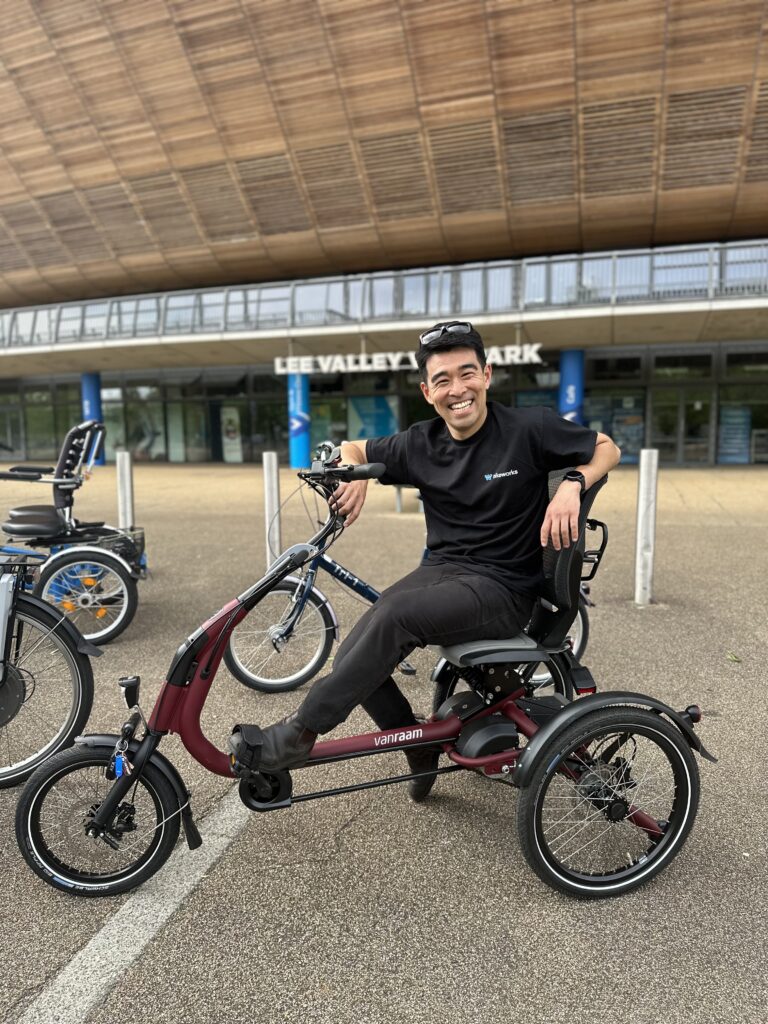
A Compact Easy Rider being demo'd by a Bikeworks team member

Where the £10,000 will go

Cycle 535 is raising £10,000 towards increasing Bikeworks’ specialist cycle fleet for disabled children and young people.

The immediate priorities are:

  • A van Raam Easy Rider Compact Small, offering a stable seated position and back support.
  • A van Raam Easy Rider Compact, making this type of cycling available to a wider range of riders.
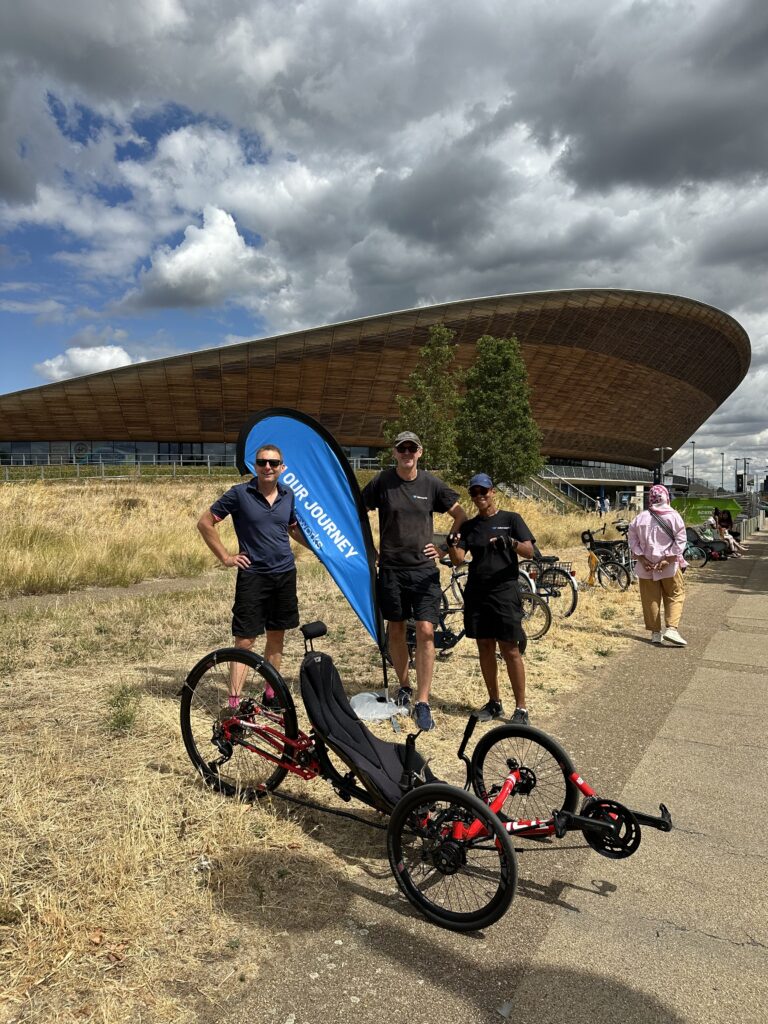
  • An ICE Sprint X Pixel, adding a compact recumbent trike with a different riding position and handling experience.

Each works differently. Adding these cycles to the fleet would mean more younger riders can find a cycle that works.

New cycles purchased through the campaign will join our shared All Ability fleet and be ridden across our clubs for years to come.


Back Cycle 535

The challenge will end at Guildhall after five days. New specialist cycles purchased through the campaign will stay in our shared fleet and be ridden session after session, for years to come.

Donate to Cycle 535 through GoFundMe and share the campaign.

No Child Left Behind starts with the right cycle

Bikeworks exists to reduce barriers to cycling.

For two decades, we have used cycles as a tool for good. The work has always been practical: finding the cycle, setting, support and maintenance that make riding possible where conventional cycling provision does not reach far enough.

In our 20th year, No Child Left Behind brings that mission into sharper focus. Access to cycling should not depend on being able to ride a two-wheeler, join a mainstream session, or attend a school or community setting with its own specialist fleet.

The need is clear. Activity Alliance’s Play, Move, Belong research found only 26% of young disabled people say they can take part in sport and activity at school all the time, compared with 38% of non-disabled young people.

Cycling can bring movement, independence, skill, time outdoors and shared experience. The question is not whether cycling has value for children and young people. It does.

The question is whether the right conditions are in place: a cycle that fits, instructors who can adapt, a setting that works, and a practical plan to keep the offer active, safe and maintained.

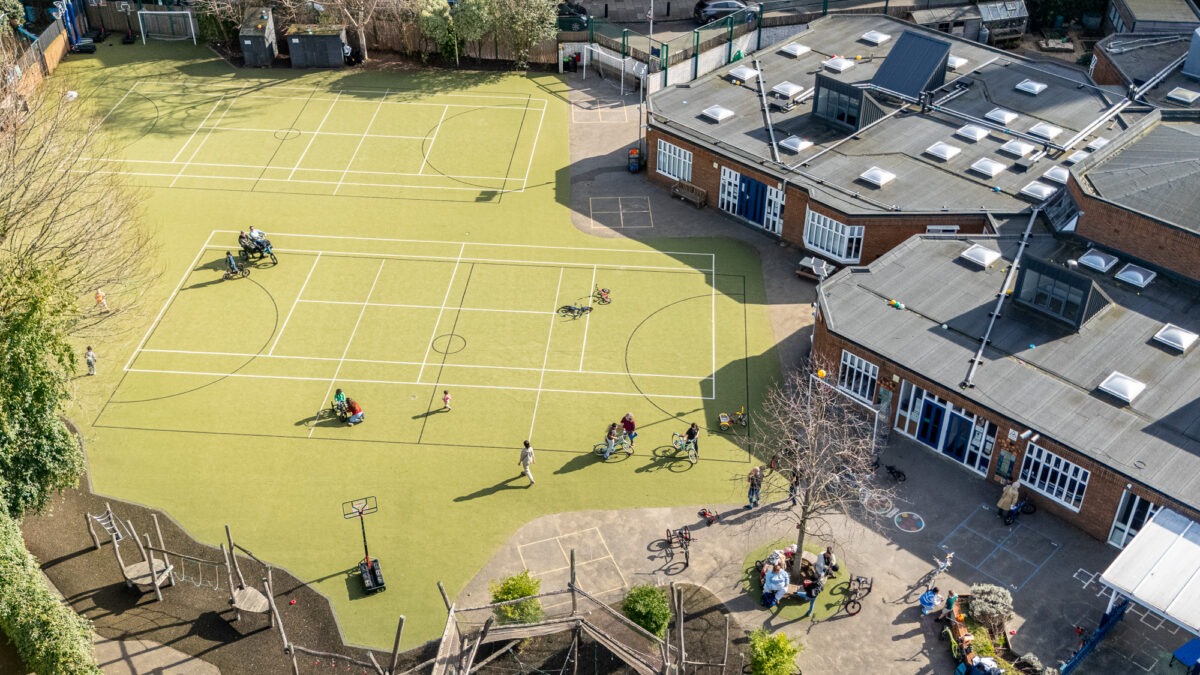
At Victoria Park All Ability Club, Phoenix College students are showing what changes when those conditions come together.

What changes at Victoria Park

Phoenix College students have been spending Saturdays with Bikeworks at Victoria Park All Ability Club.

Each session starts with the cycle. Trained Bikeworks Cycle Instructors work with students to find the right fit, position and way to get moving. Specialist and standard cycles are available, so riding is not limited to one type of bike or one way of taking part.

The starting point is not whether a child or young person can fit into a pre-set cycling session.

The starting point is what needs to be in place so cycling becomes possible.

Students ride through Victoria Park. They spend time outdoors. They move, laugh, concentrate, try again and take part together.

The cycle is the tool. Around it, something wider opens up: movement, shared activity, social connection and time in the park.

A member of staff from Phoenix College reflected on the impact:

“Social interaction can be a challenge, but the club’s friendly and supportive atmosphere encourages positive communication and connection with others. Being able to engage in a shared activity helps them develop social skills in a natural and enjoyable way.”

That is the heart of the work.

Not asking young people to adapt to a fixed cycling offer.

Changing the offer so cycling becomes possible.

Why the right cycle matters

A specialist cycle is not an add-on.

A trike, handcycle, recumbent, wheelchair platform cycle, side-by-side or adapted cycle can open up cycling in a different way. The right choice depends on the rider, the site, storage, staff support, servicing and how often the cycle will be used.

Those decisions are hard to make from a catalogue alone.

A catalogue can show a product.

A Bikeworks session shows the product being used: how the cycle fits, how the rider is supported, how instructors adapt the session, and what needs to sit around the cycle so it can be used safely and regularly.

That matters for schools, colleges, local authorities and community organisations thinking about their own fleet, site or inclusive cycling offer.

From the right cycle to the right offer

Bikeworks can help organisations move from interest to practical delivery.

That can mean visiting an All Ability Club to see specialist cycles in use.

It can mean arranging test rides, talking through product options, choosing the right fleet, or purchasing specialist cycles through Bikeworks.

It can mean putting a maintenance package in place so specialist and standard cycles stay safe, roadworthy and ready to use.

It can also mean bringing Bikeworks into a school, college or community setting with trained instructors, specialist cycles and a delivery plan shaped around the site, the students and the outcomes wanted.

The product matters. The fit matters. The maintenance matters. The instructors matter. The setting matters.

When those pieces are planned properly, cycling becomes possible.

That is cycling equity in practice.

Talk to Bikeworks

If you are a school, college, local authority or community organisation, Bikeworks can help you explore what inclusive cycling could look like in your setting.

We can talk through specialist cycles, test rides, fleet advice, cycle sales, maintenance packages, visits to our All Ability Clubs and bespoke cycling delivery.

Email: all.ability@bikeworks.org.uk

No child should be left behind when it comes to cycling.

Why the Right Fleet Matters for Inclusive Cycling

By Jamie Lawson, Inclusive Cycling Advisor at Bikeworks

When people think about cycling, they often picture two wheels, balance, and speed. But cycling can take many different forms, and with the right equipment, it becomes an activity that everyone can enjoy. That’s why having a fleet inclusive of cycles is essential, not only for All Ability Clubs, but also for schools, local authorities, care homes, and community groups that want to make cycling accessible to everyone.

As someone who both advises on inclusion and rides at Bikeworks’ All Ability Clubs, I see every week how the right cycle can remove any unnecessary barriers. A cycle that feels safe and comfortable not only makes participation possible, but also enables riders to experience the joy and freedom of cycling.


With the right cycles, no one is left out.

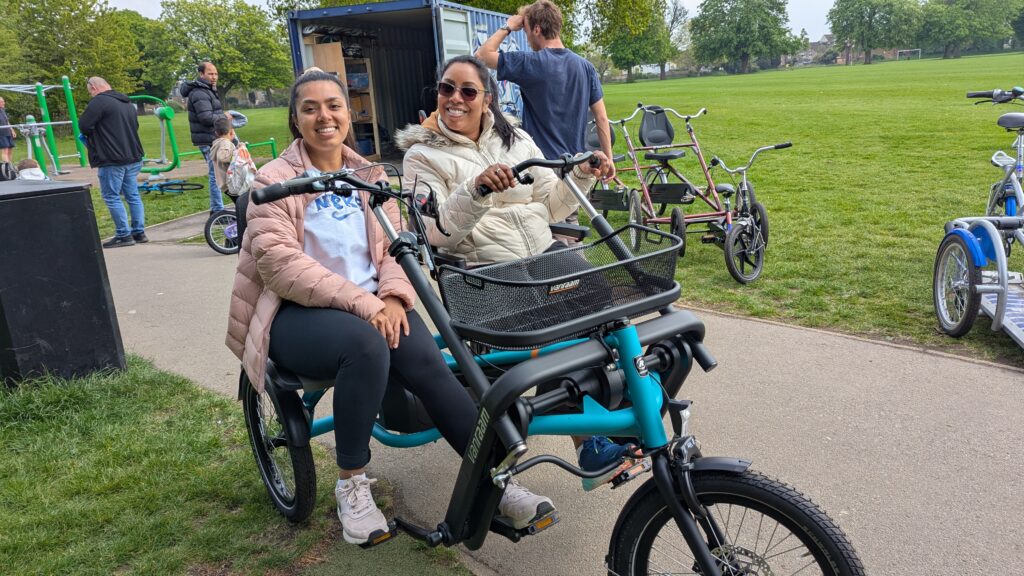
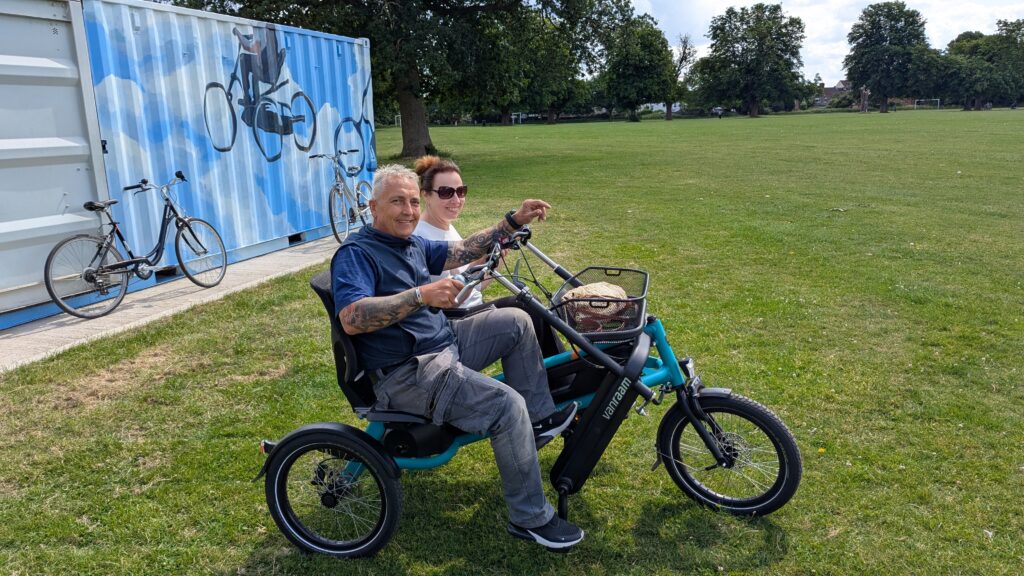
Recently, one of our clubs added two new cycles to the fleet: the Fun2Go and the EasyRider. These bikes have already transformed the way people ride together. The Fun2Go is a side-by-side tandem, so two riders can pedal and chat at the same time — perfect for friends, carers, or anyone who feels more confident with riding with company. The EasyRider, with its low step-through frame and supportive seat, makes cycling accessible for people who may struggle with balance or joint pain.

“Investing in the Fun2Go and EasyRider cycles from Bikeworks has been one of the best decisions for our community. As specialists in inclusive cycling, Bikeworks helped us choose the right bikes to meet local needs. These cycles have opened up riding to people of all ages and abilities, and we’re already seeing the benefits — more people taking part, more confidence, and more families enjoying cycling together.”


I’ve seen first-hand the joy these cycles bring.

Riders who hadn’t been on a bike in years are rediscovering the freedom of movement. Families are cycling together in ways they never thought possible. One person told me that the Fun2Go made them feel like they were “part of the action again,” after years of watching from the sidelines.

For me personally, my favourite cycle is the Fun2Go. There’s something special about being able to share the ride side by side. It turns cycling into a social activity — laughter, conversation, and exercise all rolled into one.

Getting the fleet right isn’t just about variety. It’s about equity.

It ensures that no matter your age, ability, or confidence level, there’s a cycle that can work for you. That’s what makes inclusive cycling so powerful. It’s not just about bikes — it’s about freedom, wellbeing, and connection.

If you’re curious, visit us at our Inclusive Cycle Sales Showroom opposite the Velo in the Olympic Park, or come along to one of our All Ability Clubs. We can help you find the right fleet for your school, local authority, care home, or community group.